
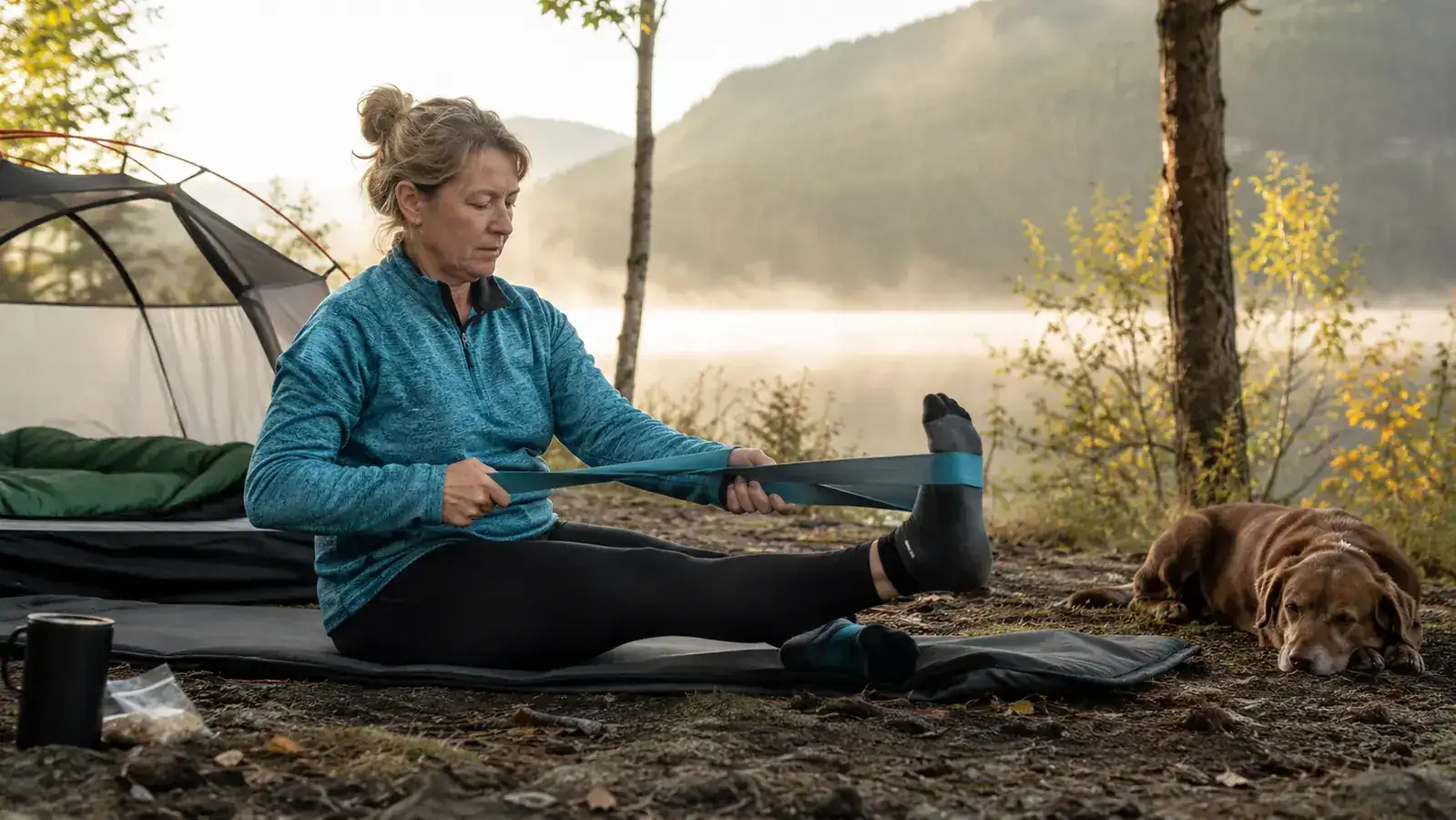
The morning I almost sat out the second day of our trip to Anza-Borrego, it wasn't my knees that stopped me at the tailgate, it was my hips. I woke up so stiff I had to sit on the edge of the truck bed for a full minute before I could swing my leg down, and my dog Biscuit was already circling, ready to go. That was the trip that finally got me to stop stretching by feel every morning and start using a Trideer stretching strap on a set routine instead.
Tight hips don't announce themselves the way a pulled muscle does. They just quietly shorten your stride, talk you into the flat loop instead of the trail with the switchbacks, and turn an eight minute warmup into something you skip because you're already running late to catch the light. Below is the exact five-step routine I use with my strap most mornings now, whether I'm home or in a tent, before I've had coffee and before my hips have decided how the day is going to go.
I'm not a physical therapist and this isn't meant to replace one. What I can tell you is what changed for me after I started doing this on purpose instead of a few halfhearted toe touches by the truck door. My stride opened up on the first mile of a hike instead of the third, and I stopped dreading the drive home after a long weekend because my hips weren't locked up by hour two.
The Strap I Actually Keep Clipped to My Pack
This is general wellness content, not medical advice. I use a Trideer stretching strap because the loops let me lock in an angle and hold it, instead of my hand slipping off my ankle halfway through. Check today's price and see the loop spacing for yourself before you head out on your next trip.
Amazon Check Today's Price on Amazon →Step 1: Warm the Joint Before You Ever Pull on the Strap
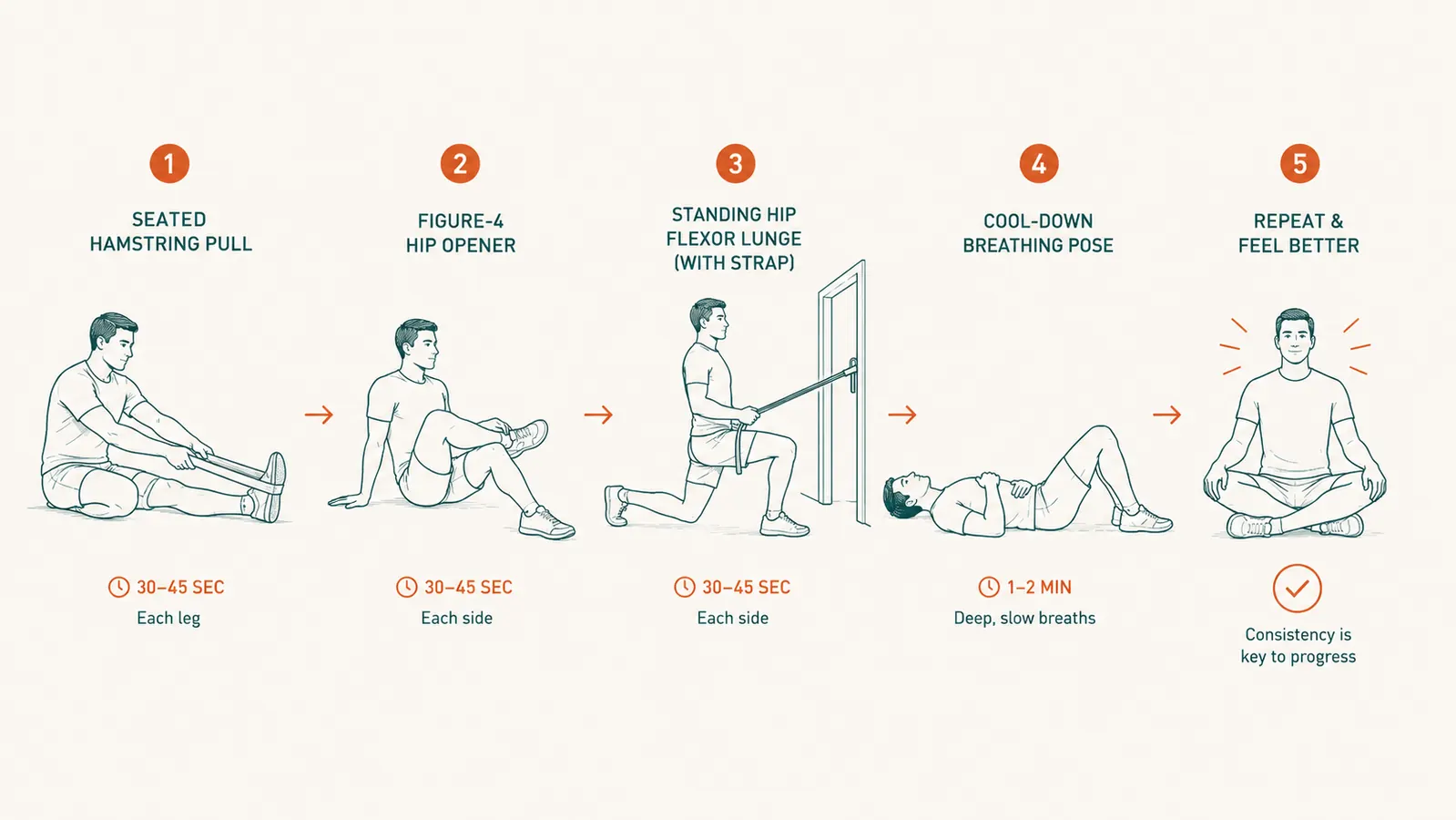
I used to grab the strap cold and go straight for a deep stretch, and it never felt right, more like fighting the joint than opening it. Now I spend 90 seconds just moving. A few slow marching-in-place steps, a handful of hip circles standing next to the tent or the bed, and a couple of controlled leg swings holding onto a tree or the doorframe. The goal isn't to break a sweat, it's just to get blood into the hip flexors and glutes so the strap work that follows actually lands instead of feeling like you're yanking on a cold rope.
This step is the one I see people skip most often, and it's the one that made the biggest difference for me. On the mornings I rush past it, the seated stretches in step two feel shallow, like I'm only getting the surface of the tightness. On the mornings I give it the full 90 seconds, the strap can actually do its job.
On travel days I do this same 90 seconds standing next to the car at a rest stop, not just at home or at camp. It looks a little odd in a parking lot, but it takes the edge off the stiffness from sitting before I even get to the strap work, and it means I'm not starting from zero when we finally stop for the night.
Step 2: Seated Hamstring and Hip Flexor Pull
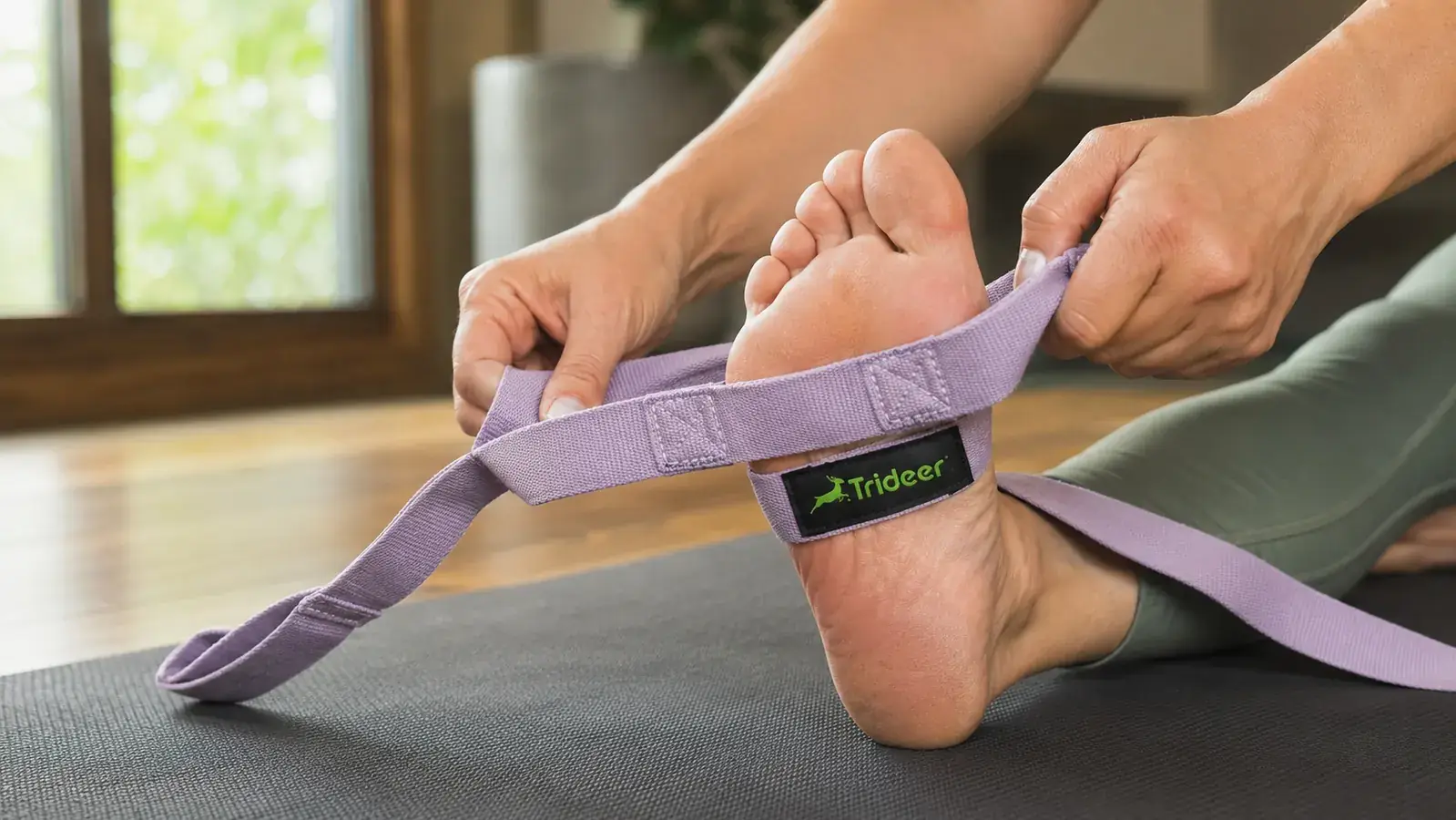
Sit on the ground, a mat, or a foam pad with both legs extended in front of you. Loop one end of the Trideer strap around the ball of one foot, using whichever loop lands the strap at a length where your arms stay close to your body instead of reaching. Keeping that leg straight and your lower back long rather than rounded, gently pull the strap to draw your toes toward you and your leg toward your chest until you feel a stretch through the back of the thigh and the hip crease, not a sharp pull in the knee.
Hold that for 30 seconds, breathing normally, then ease off slowly rather than dropping the leg. Switch sides. I do this one twice per leg most mornings, because it's the stretch that undoes the specific tightness from sleeping curled up in a sleeping bag or sitting through a long drive the day before.
The reason the strap matters here versus just reaching for your foot with your hand is control. With my hand I'd either not reach far enough or I'd round my back to compensate, which just moves the strain to a different place. With the Trideer strap looped around the foot, I can stay upright and adjust the pull an inch at a time, which is the whole reason I finally stuck with a routine instead of giving up on stretching after a week.
Step 3: Figure-4 Hip Opener
Still seated, bend one knee and cross that ankle over the opposite knee so your legs form a rough figure 4. Loop the strap around the thigh of the bent leg, just above the knee, and gently draw that thigh toward your chest. This one targets the outer hip and glute, the muscles that get tight from long stretches of sitting in a truck cab or a plane seat and rarely get touched by a basic hamstring stretch.
Hold 20 to 30 seconds per side. I keep this one gentle. The outer hip can feel stubborn and it's tempting to force it, but a slow steady pull with the strap gets further than a hard yank ever does. If it feels sharp rather than like a deep stretch, back off the tension and check that your hips are staying level on the ground.
This is the stretch I lean on most after a long drive, more than after a hike. The outer hip tightness from sitting for six hours in the truck feels completely different from trail soreness, tighter and more stuck, and this is the one position in the whole routine that reliably reaches it.
Step 4: Standing Hip Flexor Lunge, Strap Anchored
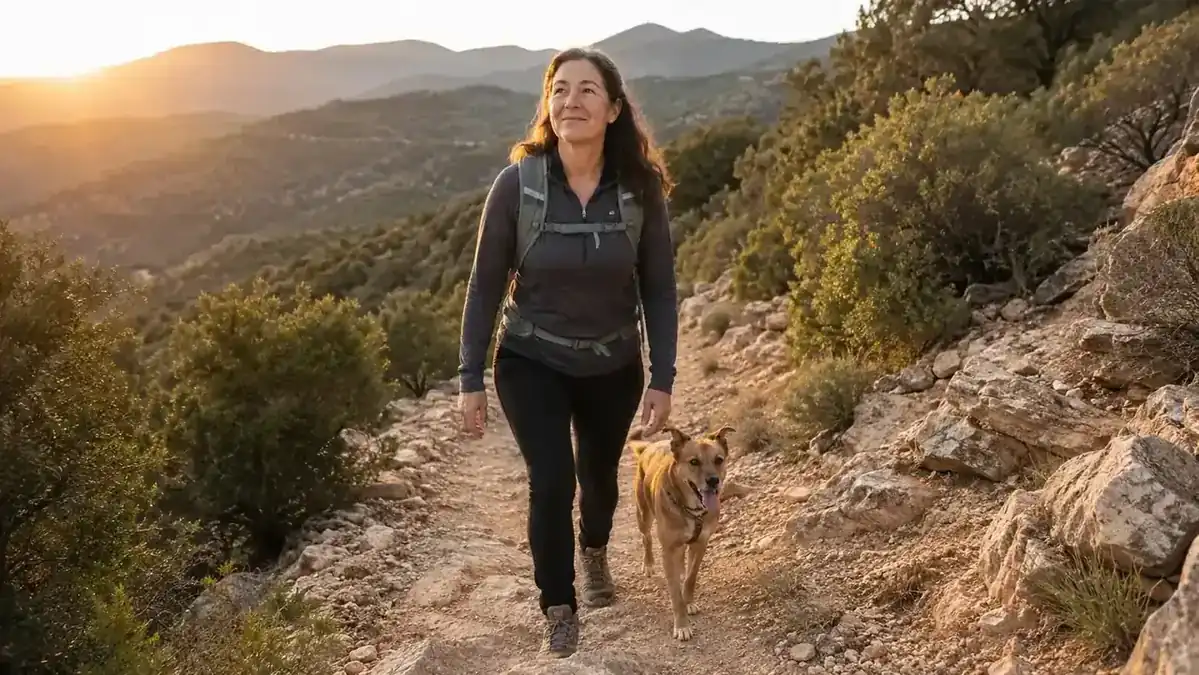
This is the step that made the actual difference on the trail for me, because tight hip flexors are what shorten your stride going uphill. Anchor the strap around a doorframe, a tree trunk, or a sturdy tailgate hinge at roughly ankle height, and loop the other end around your back foot while you're in a kneeling lunge position, front knee bent, back knee down on a pad. The strap gently pulls the back heel toward the anchor point, deepening the stretch through the front of the hip without you having to hold your own foot behind you and lose your balance.
Hold for 30 seconds, keeping your torso upright rather than leaning forward over the front knee. Switch sides. The first few times I did this one at camp, I used a low tree branch as the anchor and it worked just as well as a doorframe at home. That portability is honestly the whole reason I started bringing the strap on trips instead of leaving my stretching to whatever I remembered from a class years ago.
If you don't have anything to anchor the strap to, you can do a simpler version by just holding the strap ends in your hand behind you and pulling gently, but the anchored version gives a steadier, more even pull through the whole hold. I keep a spare loop of paracord in my kit now specifically for anchoring the strap when there's nothing at the right height nearby.
Step 5: Cool Down and Reset Your Breathing
Unclip the strap, stand up slowly, and take 30 seconds to just breathe and let your hips settle before you move into the day. I roll my shoulders back, take a few slow breaths, and do a couple of easy hip circles, the same ones from step one but slower now, checking how much more range I have compared to when I started.
This last step feels optional and it isn't. Going straight from a deep stretch into strapping on a pack or climbing into the truck undoes some of what you just did. Give your body those 30 seconds and the loosened feeling tends to hold longer through the first hour of the hike or the first stretch of the drive.
The whole routine, start to finish, runs about eight minutes for me now. That includes rolling up the Trideer strap and clipping it back onto the outside of my pack, which is where it lives so I never have to dig for it in the morning when Biscuit is already pacing by the door of the tent.
Consistency matters more than intensity with this routine. I'm not chasing a deeper stretch every single day, I'm just trying to show up with the Trideer strap most mornings so my hips don't have a chance to lock back up between trips. Some days the figure-4 stretch feels open and easy, other days it feels like the first time all over again, and both are normal. If a stretch ever produces sharp pain instead of a pulling sensation, I stop and back off rather than push through it, and that's worth remembering no matter which step you're on.
What Else Helps
The strap routine handles the hip stiffness itself, but a few other habits stack on top of it. I try to get up and walk for a couple of minutes every hour or so on a long drive rather than sitting still until we stop for gas, and I keep water close by since dehydration seems to make everything feel tighter for me, hips included. Sleeping position matters too, and on the nights I curl up tight in the sleeping bag I notice it in my hips the next morning more than on the nights I sleep stretched out.
If you're comparing tools before you buy one, I've also written up how a stretching strap stacks up against a plain resistance band for this exact use, since people ask me that constantly, and a separate rundown of the specific mornings a strap has bailed me out of on a trip, if you want more detail before deciding whether this is worth adding to your own routine.
I also pay attention to footwear on travel days, since worn-out shoes seem to make my hips compensate in ways that show up the next morning as extra tightness. None of this replaces the strap routine, it just means the eight minutes I spend with it aren't fighting against everything else I did the day before. Small things, stacked together, seem to matter more than any single fix.
The strap doesn't replace moving your body during the day. It just makes the first eight minutes of the morning something your hips can actually work with.
Keep One in the Truck, One by the Bed
I keep a second Trideer strap in the truck now so I'm never stretching without it on a trip. It rolls up small enough to live in a side pocket next to the first aid kit. See today's price and the loop count before your next early morning trailhead start.
Amazon Check Today's Price on Amazon →