
I bought the ProsourceFit acupressure mat and pillow set in May, after a stretch of weeks where I was coming home from long days on my feet, hikes with my dog Scout, and a couple of overnight camping trips with my shoulders locked up somewhere around my ears. I'm 52, and by evening my lower back and the muscles between my shoulder blades had started announcing themselves whether I asked them to or not. A friend who does yoga swore by her mat, and after seeing the ProsourceFit set come up again and again in the reviews I was reading, I figured a mat covered in plastic spikes couldn't hurt more than an ice pack, so I ordered it.
I want to be upfront about my expectations, because they matter for how you read the rest of this. I did not think a foam mat with plastic points was going to fix a back that's had decades of desk jobs, hauling camping gear, and questionable sleeping pads behind it. I was curious whether twenty quiet minutes a day, lying on something uncomfortable enough to make me actually hold still, would do anything for the end-of-day tightness. Three months later, here's exactly what happened, week by week, not the highlight reel.
The Quick Verdict
A genuinely relaxing evening habit that took real setup and a rough first week, worth it if you go in wanting rest and tension relief, not a medical fix for chronic pain.
Amazon Check Today's Price →Twenty Minutes on the Floor Instead of Another Evening Ignoring the Tightness
If your shoulders and lower back are the last thing to relax after a long day outdoors, this is the same mat and pillow set I've been lying on most evenings for three months.
Amazon Check Today's Price on Amazon →How I've Used It
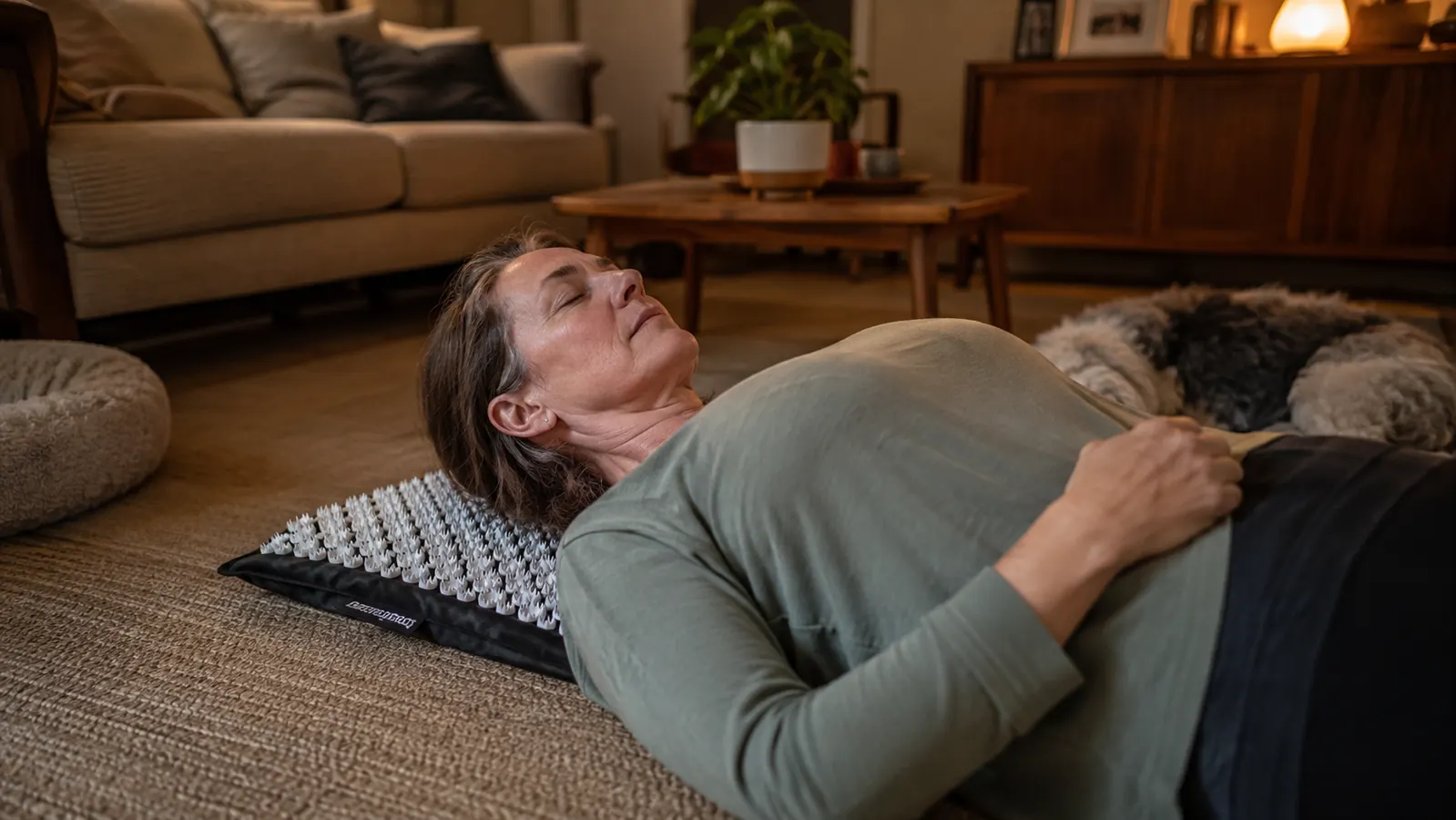
My routine is simple and I've kept it that way on purpose. Most evenings, usually after dinner and before I let myself sit down in front of the TV, I unroll the ProsourceFit mat on the living room rug, lie back on it in a t-shirt, and stay there for fifteen to twenty minutes. Some nights I use the matching pillow under my neck too, some nights just the mat under my upper back and shoulder blades. I set a timer, close my eyes, and mostly just breathe. That's it. No stretching routine layered on top, no phone.
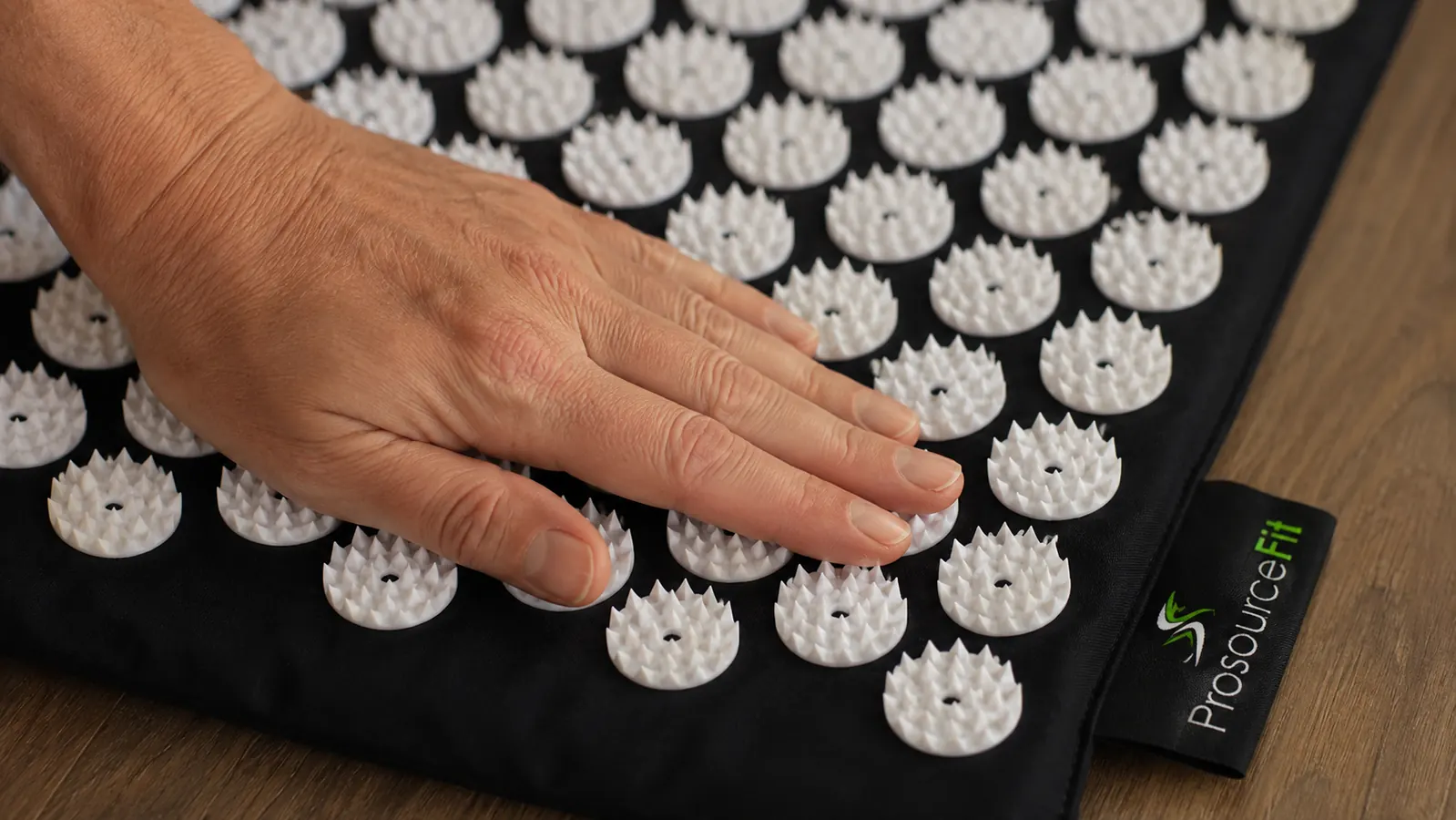
The first night was rougher than I expected. The mat is covered in small plastic flower-shaped tiles, each one ringed with points, and lying back onto it felt less like a spa treatment and more like a very deliberate decision I was regretting within the first thirty seconds. It's an intense, prickly, almost burning sensation across your whole back at once. I lasted about six minutes that first night before I sat up. ProsourceFit's own instructions mention easing into it, and I understood why immediately.
By night four or five, something shifted. The initial sharpness faded faster, usually within the first minute instead of lasting the whole session, and what was left underneath it felt more like a deep, steady pressure. I started being able to relax my shoulders down away from my ears while lying there, which sounds small but was noticeably different from the tense, bracing feeling of the first few nights. Over three months the routine has held, four to six evenings a week, sometimes skipped entirely when I'm traveling or a camping trip has me sleeping outside instead.
What's Actually Going On With All Those Spikes
The ProsourceFit mat has roughly 6,200 plastic points spread across dozens of individual tiles, sewn onto a foam base, with a matching pillow that has its own smaller field of points shaped to sit under your neck. The idea behind acupressure mats traces back to older traditions around pressure points on the body, but I want to be honest here rather than repeat marketing language: I'm not a clinician, the research on whether these mats do anything measurable is thin and mixed, and I'm not going to pretend lying on a foam mat is treating anything. What I can tell you is how it felt to me, night after night, for three months.
What I noticed most is that a good chunk of what feels good afterward is probably just the act of lying still for twenty minutes with nowhere to be. I'm someone who has a hard time sitting quietly without a phone or a task, and the mat gives me a reason to. Whether the specific pattern of pressure points is doing something distinct from a plain foam mat, I honestly can't say, and I'd be skeptical of anyone who claims they can prove it from a home routine. What I can say is that the ritual of it, the discomfort followed by the release, has become something my evenings look forward to.
The pillow is a separate piece and I use it less often than the mat itself, mostly on nights when my neck feels stiffer than my back, usually after a long drive or a night in a tent with a bad pillow substitute. It has fewer points and a firmer shape that cradles the curve of your neck. It took me longer to find the right angle with the pillow than with the mat, and the first couple of tries left me adjusting it three or four times before settling in.
Three Months of Evenings: What Changed and What Didn't
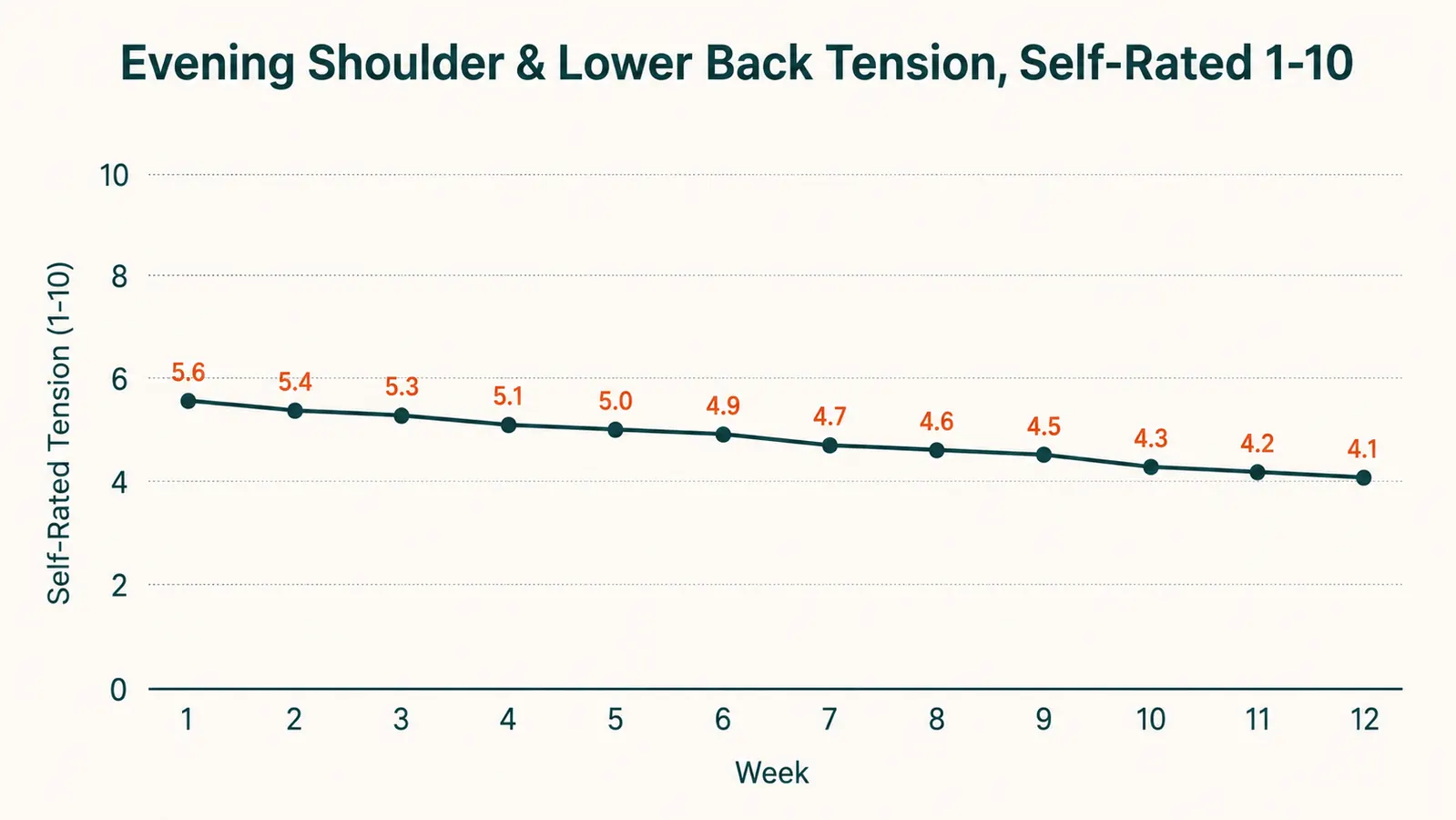
Weeks one and two were mostly about tolerance. I was building up from six minutes to the full twenty, and I'd be lying if I said I felt some dramatic wave of relief in that stretch. What I noticed instead was smaller and slower: I stopped dreading getting on the mat, and by week three it had become the thing I looked forward to instead of the thing I talked myself into. My shoulders, which used to feel like they were up around my ears by eight in the evening most nights, started feeling looser by the time I stood back up.
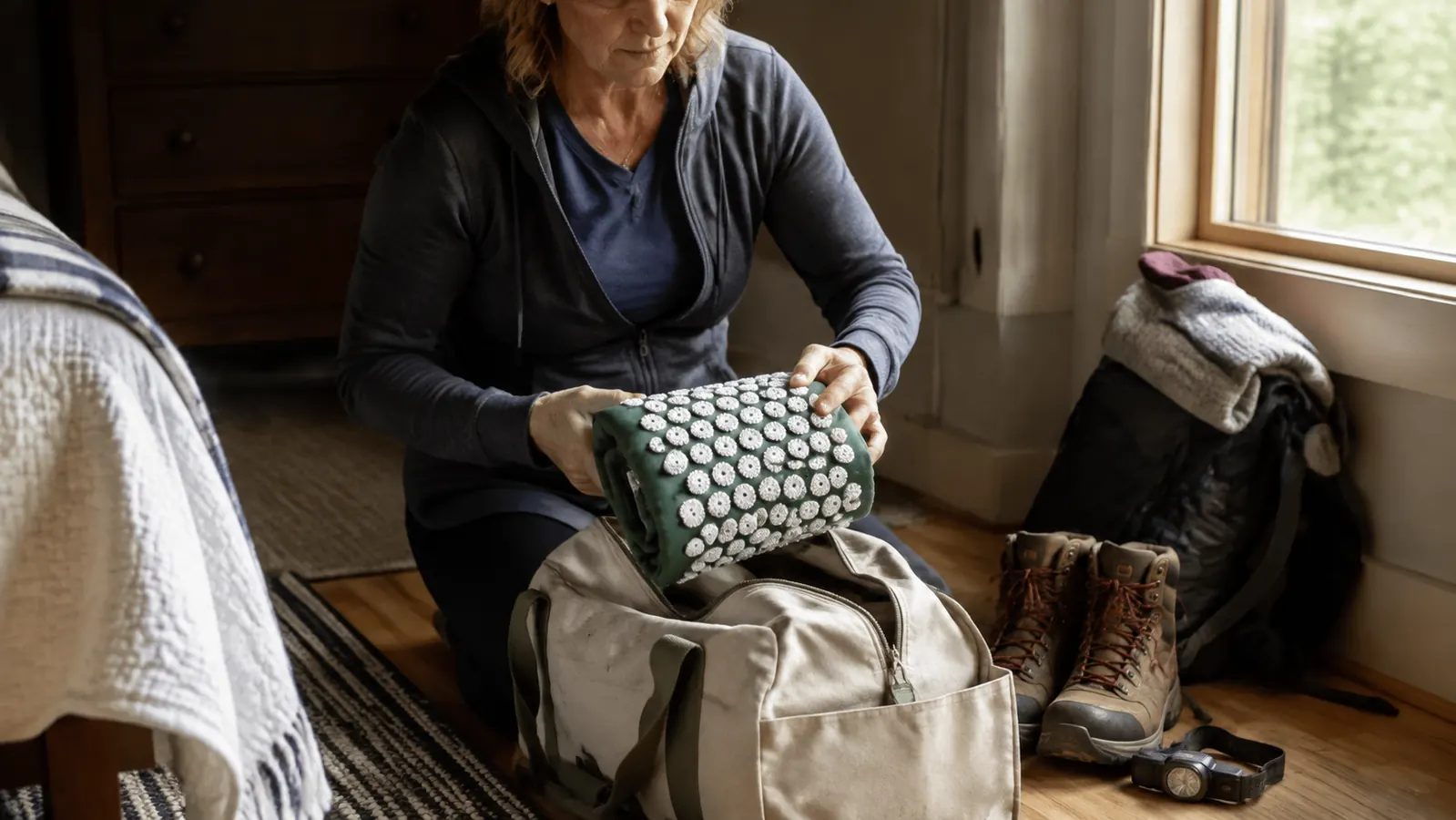
The real test came on a four-day camping trip in July. I packed the mat, rolled tight, in the bottom of my duffel, and used it three of the four evenings on a groundsheet outside the tent while Scout sniffed around the site. It worked exactly the same outdoors as it does on my living room rug, which mattered to me because that's the actual life this needs to fit into, not just a quiet house. The one evening I skipped it, after a long hike and a rough night's sleep the night before, I noticed I felt more restless getting into the tent than the other nights.
Here's the honest limit of this, though. My lower back has a stretch of tightness on the right side that's been there off and on for years, and the mat has not made that go away. Some evenings it feels looser afterward, other evenings it doesn't budge at all. I've talked to a physical therapist about that specific spot, and her read was that it's worth keeping an eye on rather than something a mat is going to resolve. If you've got pain that's persistent, sharp, or getting worse rather than just end-of-day tightness, I'd see a doctor before relying on any mat to sort it out. This one is a relaxation tool, not a treatment.
Cleaning It After Months of Sweaty Evenings
One thing nobody mentioned in the reviews I read beforehand was how much upkeep a mat like this actually needs once it's part of a real routine. I use it most nights in a t-shirt, and by August, before the air conditioning had kicked on for the evening, I was damp enough that wiping the ProsourceFit mat down afterward became its own small step. The foam base soaks up moisture faster than I expected, and if I skip drying it and roll it up damp, it holds onto a faint smell by the next evening.
It's not machine washable, so cleaning is a damp cloth and mild soap across the plastic tiles, then letting it air out fully before rolling it back up. I do this roughly once a week, more often after a hot camping trip. There was a mild plastic smell out of the box the first few days that faded on its own once I'd left it unrolled in a room with the windows open. Three months in, the tiles themselves still look and feel like they did the day I unboxed it, no cracking, no discoloration.
Tradeoffs I Didn't Expect
The mat needs a flat, reasonably firm surface to lie on comfortably, carpet or a hard floor with a thin rug works, but on our old memory foam bedroom rug it felt too soft and inconsistent under the points. I ended up moving the whole routine to the living room floor, which is a minor inconvenience but one I didn't anticipate when I ordered it. Storage is also bulkier than I expected, it doesn't fold down flat, it rolls, and rolled up it takes a noticeable chunk of a duffel bag or a closet shelf.
Before settling on the ProsourceFit set, I looked at a couple of cheaper unbranded mats and one higher-priced version with a heating element built in. The unbranded ones had reviews mentioning points snapping off or tiles coming loose from the backing within weeks, which was enough to steer me away. The heated version tempted me, but between the extra cost and one more cord to deal with, I decided to try the simpler set first and see if I even stuck with the habit before spending more on features I might not use.
What I Liked
- Straightforward twenty-minute evening routine that's easy to actually keep up with
- Roomy enough to cover shoulders to lower back in one lie-down
- Held up with no tiles loosening or points snapping after three months of near-daily use
- Pillow works well for neck and upper shoulder tension on its own
- Packed fine for a multi-day camping trip and performed the same outdoors as indoors
Where It Falls Short
- First week or two is genuinely uncomfortable, not for anyone expecting instant relaxation
- Needs a firm, flat surface, doesn't work well laid over soft carpet or bedding
- Rolls rather than folds flat, takes more storage space than expected
- Hasn't touched a longstanding tight spot in my lower back, it's a relaxation tool, not a fix for a real injury
By week three it had become the thing I looked forward to instead of the thing I talked myself into.
Who This Is For
This makes the most sense for someone who ends the day tight and wound up rather than in sharp pain, and who's looking for a low-effort way to force themselves to sit still for twenty minutes without a screen. If you're active outdoors, hiking, camping, on your feet at work, and your evenings tend to be a scroll on the couch instead of any kind of wind-down, the ProsourceFit mat gives you a reason to lie down and actually breathe. It also travels well enough that it can become part of a camping routine, not just a living room one.
It's also a reasonable fit for anyone who already has some kind of stretching or mobility habit and wants to add a purely relaxing piece to the end of it, rather than replace it. I still do a short stretch routine most mornings before a hike, and the mat has become the bookend for the evening instead, two different tools for two different parts of the day. If you're looking for one thing to do it all, this isn't it, but as one piece of a bigger routine, it's earned its spot.
Who Should Skip It
If you have a diagnosed condition, are pregnant, have a skin condition, or deal with pain that's sharp, spreading, or getting worse rather than just tight muscles, this isn't the tool for that and I'd talk to a doctor first rather than lying on a mat and hoping. It's also probably not for you if you know discomfort makes you quit things fast, the first week here is genuinely not relaxing, and if you never push past it you won't get to the part that is.
Twenty Minutes a Night, Three Months In, Still on the Living Room Floor
It took me a rough first week to get here, but this has become the one evening habit I've actually kept. If your shoulders and back are the last thing to unwind at the end of the day, it might be worth finding out for yourself.
Amazon Check Today's Price on Amazon →